29 November 2023

Renault Austral review: Trish Whelan, Irish Car


Renault have been moving decidedly more upmarket in recent times with their new cars but especially so with the arrival in July of their new Austral E-Tech full hybrid SUV, writes Trish Whelan, recently winner of the Irish Medium SUV of the Year 2024 in association with Continental Tyres.

This mid-size SUV with a self charging hybrid system is the third strand in the brand’s new generation of electrified vehicles, joining the Arkana and Megane E-Tech Electric. Austral is seen as a replacement for the brand’s Kadjar but has more room for passengers due to its longer wheelbase. It ticks all the right boxes for a stylish, practical and spacious family car. It’s sturdy and well built and would well grace any driveway. 


The driver sits high and enjoys a really good driving position and good visibility. The cabin is plenty spacious for five adults to sit in comfort with good head and knee room even in the back. And the seats are wonderfully comfy, with the driver's one including a massage function. Fit and finish is really good. Alcantara upholstery has blue top-stitching, headrests featured exclusive Esprit Alpine badges in my review car of that grade, and the aluminium pedals added a nice touch. The steering wheel sports red, white and blue stitching. Being a French auto, a small French flag is sewn into the sides of seats.

A panoramic sunroof adds extra light into the car which is especially appreciated by those in the rear. 

A big head up display shows relevant trip info on the windscreen. The dash is a work of art with an easy to work your way around 12-inch portrait style multimedia screen, angled towards the driver and a 12.3-inch driver information display. The multimedia system offers Google connected services just like with your smartphone. You can use it to talk to Google to plan your journey, change the driving mode or the car’s temperature. Just say ‘Hey Google’ and give your command. I could also set my driving seat memory position from the central console screen.

Below this screen are physical buttons for climate control, air con and front seat heaters. The Harman Kardon system delivers through 12 speakers located around the cabin. Connectivity includes two small C type USBs front and rear and a wireless phone charger. Austral has good blind spot cover, a reversing camera, parking sensors and you can get over the air software updates. When meeting a large agricultural vehicle on a very narrow country road, the central console screen showed an overhead view of the ditch, my car and the other vehicle which allowed me judge the space available to be able to ease my way forward. 

There’s a wide storage area on the central console that also houses a wireless phone charger and cupholders and has a slide across lid. Other storage areas are a bucket type glovebox, a large area below the front armrest and very good door bins. Austral provides 555 litres of boot capacity which can expand to a huge 1,525 litres with rear seats folded. The rear bench seat can be slid backwards or forwards by 16cm to allow more space in the boot if it is needed, and I always appreciate a power tailgate. 


There’s just one powertrain, based on a turbo-charged 1.2, 180bhp 3-cylinder petrol engine complemented by an electric motor and a large lithium-ion battery. It can accelerate from 0-100km/h in 8.4 seconds which is plenty sufficient for a family car. The engine is matched to a nice 7-speed automatic gearbox. 

A new advanced system with 4-wheel steering makes driving more accurate and safe and also provides a turning circle of just over 10 metres, which is comparable to that of a small city car. At speeds of up to 50km/h, the rear wheels turn in the opposite direction to the front wheels to reduce the turning circle. Above 50km/h, those rear wheels turn in the same direction as the front wheels to improve road handling and safety. 

Drive modes of Personal, Comfort, Eco or Sport, are selectable and up to 30 advanced driver assistance systems include adaptive cruise control, matrix LED headlights that automatically adjust the light beam shape to the traffic and weather conditions; Rear Cross Parking Alert, a 360 deg view 3D camera that allows you manoeuvre safely, and all around parking sensors.

On the move, Renault say that in city driving you can make up to 80pc of journeys in full electric mode. Fuel consumption of 4.7L/100km  is claimed — I achieved a combined fuel figure of 6.1L/100kms. Road tax is €180.

PRICES: Start price is €45,295. Price of this car without options €52,295; with options €56,470. 


24 November 2023

MDL takes on new smart EV range in Ireland


Irish motor vehicles distributor, Motor Distributors Limited (MDL) have been appointed as distributors in Ireland of the smart range of passenger cars, described as ‘the new premium intelligent all-electric auto brand’, writes Trish Whelan

The appointment by smart Europe GmbH - a 100pc subsidiary of smart Automobile Co. Ltd., the global joint venture company formed by Mercedes-Benz AG and Geely Automobile Co. Ltd. - takes immediate effect prior to the arrival of smart models to the Irish market. 

Welcoming the appointment, MDL Chief Executive, Paddy Finnegan said: “As distributors of passenger cars, vans and heavy commercial vehicles in Ireland, we look forward to applying our very considerable experience and resources to the introduction and on-going sales and marketing of smart vehicles as models become available here from early next year onwards.” 

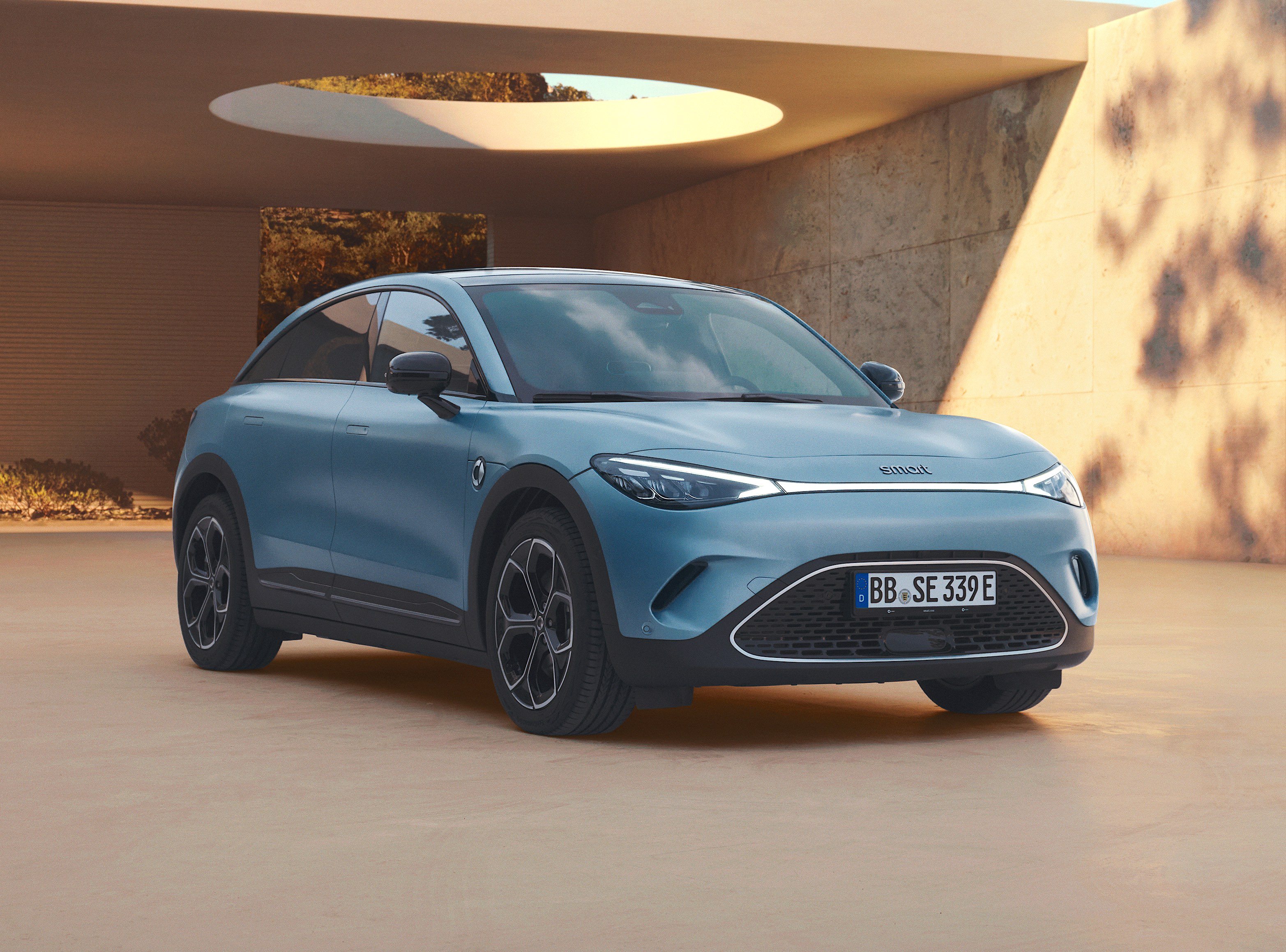
Dirk Adelmann, CEO smart Europe said: “Partnering with MDL ensures that our smart customers in Ireland will enjoy an exceptional customer experience and service.” Initially, two models will be available - smart #1 and smart #3 - the latter having made its European debut in September at the IAA auto exhibition in Munich. #3 is pictured above, #1 below. 

Branded with the ‘hashtag’ motif and a numerical model designation, the new electric smart range has a premium design and advanced technology, emerging as a larger in size and spaciousness range of four-door, five-seater models. Arriving here in early 2024, customers can view and reserve a smart model before year-end and in time for 241 registrations through sales outlets whose appointments will shortly be announced.


Nissan drops €5,000 off LEAF EV price


Nissan has dropped €5,000 off the cost of buying a 100pc Nissan LEAF for 241 making it possible for motorists to drive off in the small EV for €28,495, writes Trish Whelan

The €5,000 price drop is available on the 40kWh Nissan LEAF and Nissan is also offering 0pc finance to anyone who wants to finance the cost of buying the car through hire purchase or PCP. 

LEAF has been one of Ireland’s best-selling TVs since launched over a decade ago. The 40 kWh LEAF has a range of up to 270kms. 

Other 241 offers for customers include the Nissan 2-4-2 deal that provides new car buyers with two new cars for the price of one, or a low rate of 3.99pc PCP finance across the Nissan range.


Toyota C-HR review: Trish Whelan, Irish Car


Toyota’s C-HR, launched in 2016, is hard to miss as it is one of the most dramatic and quirky looking cars on our roads. This compact mid-sized SUV is Toyota’s third best selling passenger car year-to-date behind Corolla and Yaris Cross. Sizewise, it is smaller than its RAV4 sibling. It competes in the busy, and key C-SUV segment. 

The model had a slight refresh in late 2019 that added some new features including an enhanced look, a new multimedia system and some additional features including Apple CarPlay and Android Auto as standard as well as adding petrol electric hybrids of 1.8 and 2.0 GR Sport models inspired by Toyota Gazoo Racing’s motorsport and rally successes. Each GR Sport model is designed to exude attitude, a sporty interior and premium features. 


The racy-looking exterior features a black roof, 19-inch black 5-double spoke alloy wheels, dark chrome front grille, piano black wheel arch mouldings, high side belt lines and the rear spoiler that reflects down onto the rear window and colourful GR badges on the sides and on the boot door. Toyota cars have really good build quality, and high grade stylish interiors. 


The C-HR GR Sport is quite a premium car emphasised by its styling and use of soft touch quality materials, lots of piano black trim and beautiful Alcantara and black leather bolstered seats with contrasting red and white stitching - and GR badges in my review car. Front seats have heaters and the driver’s has lumbar support. Doors get beautiful diamond-like patterns that draw the eye. Red stitching also appears on the partly perforated leather steering wheel and on the gear gaiter. The 8ins touchscreen is located high up on the dash and angled towards the driver. Thankfully, you don’t have to go through the screen to get at the air conditioning controls as they are located on a row of switches below the screen. The driver’s 4.2-inch information display looks a bit old fashioned consisting of two indented circles for power source indication and analogue speedometer. But it works well. 

I had excellent visibility when driving due to the forward reaching windscreen, narrow A-Pillars and good A-Pillar windows. Also, the design of the rear didn’t interfere with my view out the rear view mirror. The rear can fit three adults but there’s not great legroom for anyone seated behind a very tall person in front and their view out is hampered by the car's high belt line and the upward sweep of the narrow rear side windows. External rear door handles are located up high on the doors. Cubbies include a decent glovebox, a deep area below the front armrest, a shelf for your phone beside a 12V socket on the dash, a USB port, storage areas on the central console and fine door bins. Boot space is decent enough at 358 litres. The boot floor is high and there are storage areas below. 

While this is quite a high car, due to the steep rake of the door frame, a tall passenger had some difficulty in getting into and out of the car. Safety technologies include seven airbags, blind spot alert on side mirrors, reversing camera, front and rear parking sensors, dual-zone climate control, Aux-in connector, Rear Cross Traffic Alert, Pre-Collision System with pedestrian day and cyclist detection, Adaptive Cruise Control, front fogs. 

This self charging hybrid switches between electric power or a combination of petrol and electric energy, according to driving conditions and you can opt to use the EV mode-only when driving in built up areas, but go easy on the accelerator as otherwise the petrol engine will kick in. 

Engines are a 1.8L with 122hp and a 2.0L with 184hp matched to an e-CVT automatic transmission. The more powerful hybrid powertrain allows a 0-100km/h time of 8.2 secs. Average combined fuel consumption comes in at around 4.5L/100kms making this a very economical car to run. Annual road tax is €190 for both GR Sport versions. Toyota have tuned the steering and suspension to help improve the car’s driving dynamics. 

I really enjoyed driving this car and it was very comfy to travel in. Handling is sharp, steering nicely direct, acceleration very good and the car holds the road well. With a turning radius of 5.2m it can turn easily on city streets or in parking lots. The second generation of the model, to launch next year, will include a choice of four electrified powertrains including a 2.0 plug-in hybrid electric model. Priced from €34,955; review car from €44,560.


22 November 2023

Revised Tucson on the way


Hyundai is reverting to physical controls for features such as climate and entertainment settings in the revised Tucson due in Europe next year, writes Brian Byrne.

These are part of a completely revised dashboard design for the model, which consistently features in the best-selling lists in the Irish market.

Externally there's to be a new grille styling with fewer lighting elements in the side stacks. 


Citroen e-C4 X review: Brian Byrne, Irish Car


There’s a common thing about new cars. When they are presented to customers, or to us in the motoring media, they all come wrapped in hyperbole, writes Brian Byrne. The substance of it can differ, whether trumpeting innovation, connectivity, engineering excellence, economy, or whatever. But ‘class leading’ or ‘state of the art’ are regularly the added epithets.

The truth is, it is very hard these days for brands and their individual models to be actually better than their competitors, such is the state of development in design, powertrain, and safety right across the automotive industry. That’s going to become even more the case as electric cars reach an ever-stronger proportion of car sales. There’s not as much difference between EV powertrains as there can be in the traditional ICE ones, depending on whether they derive from performance or economy standpoints. And driver assistance systems are now ubiquitous, by regulation or ENCAP crash-test requirements, so you can own a Rolls Royce or a Dacia and probably have the same chance of surviving a severe impact incident.

Of course, there’s a quantum of difference between the comfort and perceived quality across those two brand extremes. This is where the future of cars choice is already here. The days of sound and fury as a buyer attraction are going or gone — indeed, the powertrains on even low-end electric cars offer what used to be hot-hatch acceleration, without the audial fuss.

The directors of the Citroen brand saw this coming some time ago. Anticipating that competition even from their companion brands within the Stellantis group — Peugeot, DS, Opel et al — was going to require something special, they fell back on attributes they knew a lot about from their heritage. Comfort. And style.

Which is where the e-C4 X I’m writing about this week sits squarely. The style, albeit with a few quirks in detail without which it wouldn’t be Citroen, is in my perception an elegance with edge among a compact hatch segment where sameness can too easily become a norm. You can quibble about the complicated frontage, or raise your eyebrows at the rear lights. Whatever. They are but Citroenicities (Citroen eccentricities). The proportions are good, the presence is solid. And nobody who knows anything at all about their car brands will wonder what are you driving.


Inside is the same kind of individuality. Strong design on the centre stack under the infotainment screen. A steering wheel squeezed both top and bottom, to different extents. But a strong emphasis on practicality, especially with the climate controls. Which is especially nice given that Citroen were the first brand where they put everything into those dratted stroke and scroll touchscreens — I complained about that from the very first launch. I continued complaining. Now they have gone back to knobs and switches. I don't take sole credit for it, very many other journalists did too.

That liftback design offers a coupe exterior perspective but doesn't compromise on interior space in any way, so rear seat passengers have a much head space as those in front. And the style also gives a quite ginormous boot.


My review car was the electric version, but petrol and diesel versions have recently arrived. The 136hp output and a rated range of 360km may both seem light but it is the experience of most EV owners nowadays that with home charging, that lower figure is more than adequate for almost all daily use. It also strikes an efficiency balance in overall vehicle weight.

The drive is on a par with other electrics in its space, which are all very good in this respect. But it is in the comfort stakes that the Citroen strides out way ahead of that growing pack. It is where the brand shows that, in this characteristic, what they claim is not hyperbole. It's real. A proprietary suspension tech that really does work, and some smarts applied to seat design are the complementary elements here that prove to be more than their sum.

Citroen as a brand these days claims its comfort role with a capital C. With the e-C4 X it is the latest promise fulfilled. You can also expect it in the petrol and diesel versions.

PRICE: C4 X petrol from €29,100; diesel €37,600; e-C4 X review car from €33,418. WHAT I LIKED: A practical and interesting car true to its Citroen eccentricities. 


21 November 2023

Kia Ireland launches new EV9 flagship model


Kia Ireland has launched its all-electric EV9 SUV with a range of up to 563kms, writes Trish Whelan. It is the company’s first three-row electric flagship SUV available as a six or seven-seater. 

The exterior’s long, geometrically styled profile with clean lines also embraces the toughness of an SUV. This is a large vehicle with an overall length of 5,015mm, a wheelbase of 3,100mm, and overall height of 1,750mm. Minimum ground clearance is 177mm. 


The spacious interior continues the minimalist style with an easy-to-use layout. The boxy (but very stylish!) SUV styling and long wheelbase (and flat floor) allow for more interior room with premium lounge-style comfort in all three rows of seats. Second-row seats have a swivel function and can be turned around to face the third row and directly interact with those seated behind. In this layout, the long sliding tray extending from the centre console, acts as a table in between the seats. 


Physical buttons more up and down for key infotainment functions. The dash consists of a curved 12.3-inch cluster in front of the driver, a 12.3-inch curved infotainment display screen with navigation. You also get a very informative Head-Up Display with route direction graphics. The boot offers 828 litres of storage space when 4/5 seats are upright, and up to 333 litres when 6/7 seats are upright. Up to ten items in the EV9 have been produced from sustainable materials. Earth and GT-Line interiors get vegan leather upholstery. Noise insulation includes sound-absorbing tyres, laminated sound insulation glass and sound absorbing carpets. 

The line-up consists of Earth and GT-Line models with Rear Wheel Drive and All-Wheel Drive. Both versions come with a 99.8kW battery featuring the company’s fourth-generation battery technology. The rear-wheel drive Earth model has a 150kW motor capable of a maximum torque output of 350 Nm, and providing an all-electric range of up to 563kms. The AWD GT-Line is powered by twin 141kW electric motors with max torque of 350 Nm and 350, front and rear, and a range of up to 505km (WLTP rated). 


Standard features for the Earth version include 19-inch alloys, screens already mentioned, fingerprint recognition, a 360deg surround view monitor, reversing camera, wireless mobile phone charger, and a whole array of top-end driver-assist and safety features that include nine airbags, blind spot monitor and blind-spot collision-avoidance assist. Remote Smart Parking Assist 2, standard on GT-Line, allows the vehicle to park itself in perpendicular, diagonal, and parallel parking spots. A feature of the EV9’s connectivity will be the option for owners to buy specific extra features with over-the-air software upgrades. Five exterior colours are offered. The EV9 has up to 2,500kg towing capacity. 

Ultra-fast charging can add up to 249km of driving range in 15 minutes. 

The Earth 7-seat RWD is priced at €77,500, the GT-Line 6-seat AWD at €85,500; the GT-Line 7-seat AWD €85,500. Wait time is around two-and-a-half months. 

EV9 competes in the E-SUV segment where main rivals include the Tesla Model X, BMW iX, Mercedes-Benz EQE, Audi Q8 e-tron, and Volvo’s EX90. 

Kia plan to sell one million BEV (Battery Electric Vehicles) by 2026 of which 25pc will be electric-only models and 1.6 million by 2030 with 37pc 100pc electric models. An EV3 is due out next October, EV4 in Q1 2025 and EV5 in Q2 2025. 

An EV9 launch incentive pack consists of 3 free services, a free home charger, €500 home energy credit (Energia), 2-year Kia charge, Ionity Plus Package, a €500 Kia accessory voucher, 1.9pc APR finance, and a €500 SuperValu gift card. 

At yesterday’s launch, Kia Ireland Managing Director Ronan Flood (pictured below with the EV9) told how the Irish company is currently transforming its dealerships to raise the profile of the brand around the country. Year-to-date over 9,000 Kias have been registered with Sportage the second best-selling car. Mr Flood is hopeful of increasing this figure to 10,000 units next year. Kia Ireland currently enjoys a 7.5pc market share in Ireland.  


17 November 2023

Review: Toyota Hilux - Trish Whelan, Irish Car


Toyota Hilux pickups have transported people to and through the most remote locations on the planet since production began in 1968, tackling every kind of terrain with a high level of durability and reliability during sustained heavy use, or even abuse. 

There have been eight generations of the model so far, along with some facelifts, but Toyota say the current model is tougher, stronger and more powerful than ever with a very strong body frame, high ground clearance and ‘exceptional’ wheel articulation — meaning even the toughest terrain can be tacked with confidence. 
 
Grades are DLX Single Cab with manual transmission, DLX Double Cab M/T, SR5 Double Cab (M/T, A/T), Invincible Double Cab (A/T) and the GR Sport Double Cab (A/T) being reviewed here that comes with Gazoo Racing GR Sport exterior graphics, a new design honeycomb grille insert with Toyota badging, matte black wheel arch extensions, black bonnet and roof, side steps, 17-inch alloy wheels with all-terrain tyres. My wheels were bi-tone black machined-face GR Sport alloys. 

This large pick-up comes with huge road presence, emphasised by its tough appearance and muscular stance. Tough mouldings protect the bodywork in the urban jungle as many pick-ups are also used by families with active lifestyles. 


The interior features high levels of comfort, and technology that keeps you well connected. The dark cabin is quite plush with nice shiny trim and lots of sporty red colour dotted around including a red bar across the dash, red stitching on seats, steering wheel and pull-up traditional handbrake, and the GR Sport logo embroidered on the headrests. The GR Sport version has suede and leather upholstery. 

A small digital clock sits atop the dash while the 8ins touchscreen includes navigation, Bluetooth streaming, hands-free calls, Apple CarPlay and Android Auto compatibility. There are buttons for temperature controls and the seat heater. The driver’s information display has different information options to choose from. 


While visibility is good out the back window it’s not great over your shoulder due to the wide B-Pillars. Also, there is no blind spot alert on side mirrors. Cubbies include a compartment over the large bucket-type glovebox, a big area below the armrest and decent door bins. 

My passengers and I found it difficult to get in and out of the cabin — despite the big handgrips — due to the very narrow side steps that were barely wide enough for my small size five shoe, never mind a man-sized boot. When exiting, you can’t see the step as it is tucked in below the sill out of sight. 

Those in the rear can enjoy sitting in comfort with huge head and legroom. 

Unfortunately, I couldn’t test drive my Hilux to anywhere approaching its potential, just on an off-road track with lots of gravel and deep potholes where the GR Sport suspension shone through. For those who venture farther afield, Hilux has 310mm of ground clearance and a wading depth of 700mm. 

In the 4WD system, use the front-wheel drive control switch to select H2 (high speed position 2WD) for normal driving on dry hard-surfaced roads for greater economy; move the dial to H4 (high speed position 4WD) for driving off-road on icy or snow-covered roads as it provides greater traction that 2WD; and use L4 (low speed position 4WD) for maximum power and traction like when climbing or descending steep hills, off-road driving and hard pulling in sand, mud or deep snow. 

Eco and Power modes can be selected to suit driving conditions; Power mode for when you need high levels of response like driving in mountainous regions; Eco mode helps achieve low fuel consumption in trips that involve frequent accelerating. 

The big cargo deck can easily carry bulky or heavy loads like machinery and tools with its payload of 1,010kg. GVW is 3,210kg. Towing capacity is 3,500kg braked and 750kg unbraked. Accessories include a protection pack of an under rail bed liner. This polyethylene liner covers both the deck bed and side panels. 

My review vehicle was powered by quite a noisy but powerful 2.8, 204hp diesel engine mated to a 6-speed automatic transmission and, of course, 4WD. The steering wheel is nicely weighted and acceleration is fast. Max torque is 500Nm @1,600-2,800rpm and my trip computer showed a fuel return of 10.1 L/100kms. Annual road tax is €333. Toyota claim the GR Sport delivers the best handling in the Hilux range. 

Features include Toyota Safety Sense 2 with an array of high-end safety features such as Adaptive Cruise Control, a dusk sensor, front fogs, Hill-start Assist, Active Terrain Control, Downhill Assist Control, front fog lights dual zone climate control, a rear view camera, front and rear parking sensors and a full spare alloy wheel. 

Hilux carries a 3yrs/100,000km manufacturer’s warranty, 3yrs/unlimited mileage - Surface rust/Paintwork warranty, 6yrs/unlimited mileage - Corrosion Perforation. Priced from €36,230. My GR Sport double cab from €61,070.


15 November 2023

Hyundai Kona review: Trish Whelan, Irish Car


Hyundai are on a major roll with their Ionic 5 and Ionic 6 electric cars being awarded World Car of the Year for the last two years and the Ionic 6 recently voted Irish Car of the Year for 2024. 

The model has previously sold over 12,000 units since launched in 2018. 

New Kona has moved up in size from the previous generation which was a small crossover aimed at families with small kiddies. 

The model has now evolved into a more stylish and larger SUV that is wider and longer than before so is aimed at larger families with teens who need more space providing them with more head, shoulder and leg room. Kona is positioned between the Bayon and the Tucson in the company’s crossover SUV line-up.  

The SUV’s sporty character is emphasised by its futuristic front design, rugged wheel arch cladding and high ground clearance. I especially liked the sharp lines at the sides that harmonise with the satin chrome moulding that travels through the belt line to swerve up to the rear spoiler, creating a contour that wraps around the entire car. The rear has a side-to-side light bar that makes the vehicle appear even wider. 


The cabin is now more stylish and a lot roomier. Comfy seats hold you in snugly and the driver’s has lumbar support. Front ones can be heated, along with the steering wheel. The dash is dominated by two 12.3-inch digital displays that merge together with beautiful graphics set against a black glass type background. The infotainment screen manages many of the car’s functions and its big suite of safety technology, and of course, Apple CarPlay/Android Auto. 

You can change the gauge style of the driver’s screen to suit your own preference: ‘Classic’ with a traditional style two-dial screen or ‘Simple’ that shows your current speed in digital numbers. 

The thick stalk gear shift control on my hybrid version was located on the lower right hand side of the steering wheel. Useful storage are a tray area below the front arm rest with adjustable cupholders, a decent glovebox with an overhead open area, and good door bins. You also get a wireless phone charger, 12v power socket and two small C-type USB ports front and rear. 

Boot capacity has grown by 30pc and is now at 466 litres. Rear seats fold flat in seconds and you don't have to remove the headrests. When folded, the boot space expands to 1300 litres. 

Drive modes are Eco, Sport and Snow. Buyers have a choice of petrol or hybrid/petrol variants. A full electric version is due this October - no spec or pricing yet. The entry-level is a 118bhp 1.0 turbocharged petrol unit. The hybrid’s 1.6 GDi direct injection petrol engine and the battery-powered electric motor work together to deliver a combined output of 141hp. The 43hp electric motor delivers high torque of 265Nm and high efficiency and also delivers really good acceleration when starting. It can do 0-100km/h in 10.9 seconds. 

Hyundai say their hybrids are well suited to urban owners who experience constant stop/start driving in towns and cities which helps with regenerative braking that charges the battery so you don’t have to. The energy stored in the battery powers the electric motor to help in acceleration, uphill driving, and low speed driving. 

A small crib was the absence of any blind spot alert on my car. I was able to get a really excellent driving position and enjoyed good all-round visibility and good feedback from the steering wheel. Parking assist features were all a great help when parking in tight spots. Hyundai engineers have worked well on road noise reduction resulting in a really quiet cabin. 

The engine is mated to a really smooth automatic transmission. For me, it is one of the best around contributing hugely to my driving enjoyment. The car switches seamlessly between its petrol engine and electric motor, but sometimes uses both. I managed to achieve a healthy 5.6L/100kms (50mpg) over a wide mix of roads. Road tax is €180. 

Trims are Signature, Elegance (my car), and N Line - the latter is more about looks than features added. New Kona is the first Hyundai to apply the new Connected Navigation Cockpit, and has Bluelink application as standard on all drivetrains. Also standard are LED lights front and rear, 16-inch alloy wheels, black side body moulding, tinted rear windows, a windscreen defog function, auto climate control, rear view camera, front and rear parking sensors, cruise control, a 12.3-inch touchscreen and 4-inch Cluster, a skinny spare wheel, and trailer package. 


My Elegance car had stunning 18-inch alloys, power folding mirrors, 12.3-inch touchscreen with Satellite Navigation and Media Centre, a supervision cluster, and black roof rails. Safety features included Hill Start Assist, Downhill Brake Control, Forward Collision-Avoidance Assist, Smart Cruise Control, Auto Hold, and Highway Driving Assistance launched with New Kona. 

Kona was awarded a maximum five star safety rating by Euro NCAP when tested in 2017. Competitors include the Toyota C-HR, Peugeot 2008 and Nissan Juke. 

Kona has a 5yr/unlimited kms warranty. 

Prices are from €30,895. My review car €36,045. 


Polestar 3 first view (static): Brian Byrne, Irish Car


The arrival of two new Polestar models to Ireland next year is designed to dramatically accelerate the profile of a brand dedicated to premium electric performance, writes Brian Byrne. The Polestar 3 large SUV will be first here, and will be followed by the Polestar 4, a coupe-SUV which will slot between the 2 and 3. An updated version of the Polestar 2 will also roll out in 2024, making the Chinese-owned brand a very serious contender against the European premium EV competition from Audi, BMW, Mercedes-Benz and Porsche.

The arrival of the 3 will also put up the gloves right in the face of US EV front-runner Tesla, with the car directly challenging the Model Y large SUV. On my first look at the new Polestar, it's a long way ahead of the Tesla in style and interior quality. Will that be enough to not just knock the American car off its perch, but also drag customers past the come-hither dealership doors of the luxury cars from Stuttgart and Munich? Hmm, it's going to be an interesting time.

A quick recap on the Polestar brand. Originally a performance version of Volvo, when the long-established Swedish brand was taken over by Chinese carmaker giant Geely, they afterwards hived off Polestar as a performance brand in its own right, producing only battery electric models. The Polestar 1 never came to Ireland because it wasn't produced in RHD. The Polestar 2 has been building along quietly in single-model solitary since it arrived and recently achieved 300 unit sales for 2023. The 3 is now available to order.

In looks the latest Polestar certainly makes a big shift from being labelled as a Volvo with a longer name. Unlike the 2 which has visual cues making it seem fairly like its Volvo XC40 cousin, the Polestar 3 is very distinctively different from anything in the Volvo stable-yard. Variations on the flying boomerangs logo abound in the very futuristic headlamp systems, and the triangular opes on the lower edges of the front end. In the typical way of EVs, there's no grille, but the space behind the clean front is an unseen nerve centre for a lot of safety and traffic monitoring technology. There's an intriguing element to the the bonnet front, which incorporates an air management spoiler design that Polestar engineers say goes a long way to helping achieve a very low drag at high speeds, among other things improving the range efficiency.


There's a very stylish side silhouette with a kick-up line at the rear quarter that combines with a roofline drop which eliminates any SUV boxiness, ending in an integrated spoiler and almost what we used to call a Kammback straight down rear end. As for the style of the rear itself, it's not going to be mistaken for anything else on the road — a very clean tailgate finish and an LED stripe-light straight across under the window glass. 


The interior both feels and is very roomy, with an airy overhead from the full length glass roof. The style of the dashboard and door trim details are of the slightly restrained but highly impressive finish which tech-minded people in this price bracket pay attention to. There's a distinct emphasis on freedom of clutter both in styling and controls. The driver's information screen is small compared to systems used in the main competitor models, but the centre infotainment screen, also used to manage the climate control, is quite massive. A style feature is the chromed speaker sticking out of the top of the dashboard that is the only visible one of a large number that likely will offer full concert hall sound as the car travels in electrical quietness down the motorway. Some of those speakers are in the head-restraints, with a feature that if the driver gets a phone call, he or she are the only ones who will hear it, while the music carries on for the others in the car. With truly lots of room in the back, those there will enjoy the performance in the most comfortable environment.

On performance, the Polestar 3 will come with two motors and a long-range battery offering a rated range of 610km. The 0-100km/h is claimed at a tidy five seconds, and there's a Performance Pack option that trims that down to 4.7s. 

The target customers are those who might go for the Porsche Taycan or its cousin Audi e-tron GT, or the upper end BMW Xs including the iX electric. So far there has just been a static reveal here, but I'll be driving it in the new year, and I'm already impressed enough to be very much looking forward to that.

PRICE: From €99,900. WHAT I LIKE: If it goes as well as it looks, Polestar 3 promises to be a stunner. 


14 November 2023

Peugeot Ireland sponsors Lyndsey Davey Africa climate aid trip


Peugeot Ireland is to sponsor former Dublin Senior footballer Lyndsey Davey on her trip to Kenya as part of the Plant the Planet Games on November 17.

Davey will be one of 50 inter-county players, past and present, who will travel to Kenya on November 17 as part of the Warriors for Humanity group who will take part in the Plant the Planet Games. The players have raised hundreds of thousands of Euro as they aim to plant trees to tackle the devastating effects of climate change and raise awareness of the work of Self Help Africa.

The visit will see the athletes take part in Gaelic Football & Hurling Exhibition Matches, a soccer match against AFC Leopards as well as cultural and agricultural engagements.

This is the second year of the Plant the Planet Games, the brainchild of Warriors for Humanity CEO and Founder Alan Kerins. Last year, over €500,000 was raised by inter-county players in support of the event, with one million trees being planted to tackle the effects of climate change.

Des Cannon, Managing Director at Peugeot Ireland says “We are proud to support Lyndsey on this special trip that will contribute so much to the important work done by Self Help Africa. As official partners to Dublin GAA, it is nice to be able to support a former player in their post playing career endeavours”.

Lyndsey made her senior debut in 2004 aged just 14, only retiring last year.  She went on to win 5 All-Ireland Titles, 12 Leinster titles and 5 All-Star Awards. She works as a Firefighter and Paramedic at Dublin Airport.

Pictured are Lyndsey Davey and Ciaran Cusack (Marketing Manager at Gowan Auto, Peugeot Importers in Ireland).

Nervous times for winter drivers


Almost a third of Irish drivers say they experience a range of nervousness when driving in the rain, writes Brian Byrne

That's according to Continental Tyres Ireland who commissioned a survey that also showed a high degree of concern jumped to 74pc when they had to drive snow and icy conditions.

The survey also indicated that more than half of Irish drivers have opted not to travel on a particular day due to adverse weather.

Motorists need to adapt their driving style with the arrival of wintry conditions, says Continental's Tom Dennigan, adding that they are right to be nervous in such conditions. He also noted that having tyres fit for purpose are an essential element in cutting down accidents due to poor weather.

"Get the simple things right," he says bluntly. "Look after your tyres by checking them regularly. Always wear a seatbelt. Make sure your car is in good general condition. Never drive under the influence of drink or drugs. Slow down and adapt your driving to the prevailing conditions. If we all did those simple things right, it would be a huge boost to road safety in Ireland."

New generation C-HR arriving soon


The new generation Toyota C-HR small crossover will be available in Irish dealerships from mid-November, in time for potential buyers in early January to view, writes Brian Byrne.

Five versions of the hybrid electric vehicle will be on offer, and there will be a choice from 1.8 and 2.0 powertrains.

Prices for the new C-HR, which has a distinctively sharp design but retains style cues to it predecessors, start at €40,520.

Sustainability features include seat fabrics made from 100pc recycled plastic bottles. 

8 November 2023

Hyundai Kona hybrid review: Brian Byrne, Irish Car


This is the second new generation Kona I have reviewed since the car was launched here in the summer, writes Brian Byrne, with the reason for revisiting being the powertrain — the hybrid that runs this one is expected to be the biggest seller of the nameplate here.

Kona has grown. Longer, wider and taller than its predecessor, it comes with a longer wheelbase also and a substantially bigger boot capacity. Both of which last are likely to be much appreciated by the family buyer cohort. So will the style, which has much more visual impact than the first model, that in all honesty was kind of meh. The bonnet is high, with a streamlined but purposeful look. If the whole front looks rather EV, that's because the designers worked that version up first, adapting it later for the petrol and hybrid versions. 

The headlights styling is eye-catching and incorporated unusually in the very large wheel-arch protective moulding. There's further strength to the overall aesthetic along the profile view with more of the same protecting moulding in the style elements. There's a very clean rear and tailgate treatment, while the typography of the Kona name across the tailgate makes it exceptionally distinctive.


Inside, I appreciated the highly-integrated information displays. And the use of proper buttons, switches and knobs for the climate and volume controls is welcome — at least some of the message about over-reliance on distracting touch-screens seems to have been heard. Though technically a B-segment crossover, the car is roomy for those up front, and is also so for people in the back, providing virtually C-segment space. As somebody often challenged in getting in and out of cars easily because of their low driver door openings, I was very happy with the headroom in this one.

The review car had the 140hp 1.6 petrol-hybrid with 6-speed automatic powering the front wheels, as against the 120hp 1.0 petrol with manual gearbox in my previous Kona outing. There is also now a fully electric version which I'll get to in the new year. I found the hybrid, based on a gasoline direct injection motor along with a battery-motor drive, as smooth in operation as I could wish for even with the potential for a 6-speed dual-clutch auto to be a bit jerky. It wasn't, a credit to Hyundai's in-house transmission builders. Worth noting though is an acceleration figure of more than 11 seconds which isn't exactly trashing away from the traffic lights. (Maybe I'm just getting spoilt with the speed off the line of all the electrics I've been driving recently.)

The car has a full set of driver assists, though with very annoying associated beeps and bongs. Every time you start the car it takes ten swipe-or-tap actions on the screen to turn off the most irritating ones. The lane-keeping assist can be paused by a button on the steering wheel, but there's an 'attention' gizmo operated by a camera on the steering column that beeps angrily if you take your eyes off straight-ahead for even a couple of moments. I tried covering it with black tape so as to avoid delving through the menus every time I started the car, but then every kilometre or so it multiply beeped and flashed up a warning 'camera obscured'.

All that said, Kona was still my personal category choice in the recent Irish Car of the Year 2024 awards in association with Continental Tyres. It didn't win the category, but Hyundai Ireland are no doubt happy enough that their larger Ioniq 6 won both its category and the overall award.

PRICE: from €35,795. WHAT I LIKED: Surprising space in good style. 


3 November 2023

Hyundai Ioniq 6 is 2024 Irish Car of the Year

Joe Rayfus, Chairman of the Motoring Media Association of Ireland (MMAI); Sarah Hayes of Hyundai Ireland; and Tom Dennigan of awards sponsor, Continental Tyres; with the winning car.

The Hyundai Ioniq 6 electric car is the 2024 Irish Car of the Year in association with Continental Tyres, writes Trish Whelan. The award was presented at a ceremony in the Conrad Hotel in Dublin, the result of voting by members of the Motoring Media Association of Ireland (MMAI), who hosted the event.

It is the fourth time in four straight years that an electric vehicle has been voted the Irish Car of the Year, the oldest and most reputable automotive award title in Ireland.

The MMAI brings together 35 of Ireland’s most experienced motoring journalists, who individually assess each new car model that is launched in Ireland each year. MMAI chairman Joe Rayfus congratulated Hyundai Ireland on taking the coveted award. "What more concrete proof can there be that the era of electric motoring is truly here?" he said, adding that electric models have gone fully mainstream and luxury.

Tom Dennigan of awards sponsor Continental Tyres described the Ioniq 6 as being at the forefront of automotive design. "I am sure that our Irish Car of the Year title will be a huge boost to the nameplate’s profile with Irish motorists who are considering making the move to electric.”

Earlier in the event, the Irish Car of the Year category winners were announced.

Irish Small/Compact Car of the Year: MG4 EV

Irish Small/Compact SUV of the Year: BYD Atto 3

Irish Medium SUV of the Year: Renault Austral

Irish Medium/Large Car of the Year: Hyundai IONIQ 6

Irish Large SUV/MPV of the Year: Nissan X-TRAIL

Irish Luxury Car of the Year: BMW i7/7 Series

Irish Performance Car of the Year: BMW M2

In the Irish Van of the Year awards programme for 2024, the Ford Ranger Raptor took the category award for Irish Commercial SUV of the Year, while the overall Irish Van of the Year 2024 in association with Continental Tyres award was given to the Mercedes-Benz Citan

Andrew Johnson and Gerard Rice of MG Motor Ireland with the award for the MG4 as Irish Small/Compact Car of the Year.

Sarah Hayes of Hyundai Ireland accepting the 2024 ICOTY award from Joe Rayfus MMAI and Tom Dennigan of Continental Tyres.

Jeanne McGann, Head of Marketing & Communications, Nissan Ireland, with company MD Seamus Morgan and the category prize for the Nissan X-Trail Irish Large SUV of the Year.


2 November 2023

New generation Skoda Superb revealed


Skoda have revealed the fourth generation of their large car Superb, which features the brand's updated style cues and higher specification, writes Brian Byrne.

The new bar is longer and taller than the predecessor vehicle, but retains the same wheelbase.

Part of the enhanced technology are new LRD headlights offering a 40pc increase in output over the previous version.

Powertrains are petrol, diesel and an improved plug-in hybrid which the company claims offers a 100kms-plus EV range. A mild-hybrid petrol is also available for the first time in the model.

The Skoda Superb was first launched in 2001 and a total of 1.6 million units have been built. 


1 November 2023

Alfa Romeo Tonale review: Brian Byrne, Irish Car


With 113 years of history and a strong motorsport pedigree, Alfa Romeo is one of the world's iconic automotive brands, writes Brian Byrne. The company's badge, the cross and serpent representing Milan where it was first established, is one of the most recognisable. The biggest motorsport name in the world, Scuderia Ferrari, was originally founded by Enzo Ferrari as an Alfa Romeo racing team. Away from the road and track, the company built a strong business making aircraft and marine engines. And some of us still remember the movie starring role of the 1966 Alfa Romeo Spider in 'The Graduate'.

So there's a very special cachet to the Alfa Romeo name, even though through its more than ten decades the carmaker has had its ups and downs. Italian state ownership after its backing bank folded. Ownership by Fiat, later by Fiat Chrysler Automobiles, and sales declines to an almost terminal level in the first ten years of this millennium. Now a part of the Stellantis automotive giant formed with Peugeot-Citroen and Opel, there's a sense of impetus which hasn't been evident in Alfa Romeo for quite some time.

The Tonale crossover is the newest Alfa, a compact family car that is as far from the Dustin Hoffman character's graduation present as you can get. Maybe the one for a grandchild in a sequel for today, who needs something more practical for a metro-centric world with weekend forays to the country?

The Tonale does look the part. Especially in the red of my review vehicle, a traditional Italian racing colour. The triangular grille meshes well with the fully 21st century hooded headlights, and the overall effect visually lowers what is quite a high bonnet line. A crossover sameness in the profile is successfully sportified by the distinctive alloys and red Brembo brake callipers. The rear is a class act hatch design, with the scripted-font Tonale name sitting proudly under a repeat of the front end Alfa logo. There's enough distinctive presence here to set the car off from the neighbours' less legendary makes.


The inside proved well presented enough to excite a car-mad early teen who asked to sit in. Red stitching in the leather trim is subtle enough to suggest upmarket — and it's thankfully not everywhere. The steering wheel was a good heft to my hands. The rather massive aluminium-effect shifter paddles are for me a bit of overkill, but that afore-mentioned kid loved them. The main instrumentation has a 'heritage' style option that mimics the old analogues, but I preferred a more digitally modern choice. The centre touchscreen worked sensitively and there's a pleasing selection of real switchgear for climate and radio volume. Two distinctive controls are the Start-Stop button on the steering wheel, and a drive mode selector on the lower console which, along with eco and comfort settings also manages the suspension setting for sporty driving. From my driver's perspective, the whole setup felt good, including supportive seats that were yet easy to get in and out of. There's good room in the rear, and a substantial boot space.

The Tonale comes with powertrain options different from equivalent models in other Stellantis brands. There's a mild-hybrid 1.5 with 160hp that advances the MHEV system somewhat, and the 280hp combined output from the 1.3 plug-in hybrid which underpinned my car's performance — and also provided AWD through the e-motor's connection to the rear axle. We can expect an all-electric version at some stage, and in other markets there is a diesel.

My car's performance had a brisk potential of 6.2s to 100km/h. I experimented with it from standing start a few times, and even without accurate timing it certainly seemed peppy. But it did it without the kind of fuss that I would associate with Alfas of yore, when a floored pedal would excite some wheels scrabble and a rising engine note that was very distinctive to the marque. The Tonale's progress under pressure was all very civilised ... maybe too much so. On twistier passages, the short-turns steering felt good, and switching to Dynamic tightened up handling very well. But back to that metro-centric aspect for today's motorists, the all-electric capability of up to 60km or so is useful in urban commuting. A technical glitch in the fuel consumption readout in my review car means I can't offer my own accurate experience for hybrid-only general motoring, but a 7L/100km seems to be an accepted long-term average.

PRICE: From €49,995; review car €55,495. WHAT I LIKED: Practicality with the flavour of an authentic icon (though I really do miss the Alfa sound).  


Electric estate from VW in 2024


Volkswagen have released camouflaged pictures of their upcoming all-electric estate, to be named the ID.7 Tourer, writes Brian Byrne.

To be launched in Europe in 2024, the car will be the brand's first electric estate car, and a very low drag factor of 0.24 will help to maximise the vehicle's range.

The car is based on the ID.7 saloon which is currently launching ins some European markets and will offer up to 545L of boot capacity with five people on board. A 2-metre long space will be available with the rear seats folded.