The annual London-Brighton Run for veteran cars will honour Germany this year to mark the 130th anniversary of Karl Benz's Patent-Motorwagen, writes Brian Byrne.
There will be 14 German made cars among the 400+ entries for the Run, which is also the 120th anniversary of the 'Emancipation Run' that marked the abolition of the need for a man with a red flag to walk in front of cars.
Among these are a Benz Victoria and a Benz Phaeton, both from 1898, entered by the Allgemeiner Schnauferl Club, one of the world’s earliest motoring clubs, which was founded in 1900.
The Mercedes-Benz Museum is also joining in the celebration by entering two of its motoring pioneers on the Run — a 1901 Benz Spider and a 1902 Mercedes Simplex.
The Run takes place on the first Sunday in November, the 6th, and will be preceded the day before by the Regent Street Motor Show which turns London’s premier shopping street into a motoring showcase.
Showing posts with label heritage. Show all posts
6 October 2016
19 January 2015
Something for the American cars lover
In a week where the latest in American (and some European) cars are being debuted at the North American International Auto Show in Detroit, it's maybe an opportunity to look back at some of the American metal of the past, writes Brian Byrne.
By sheer coincidence, I happened to be at the RACV Great Australian Rally 2015 at Mornington Racecourse outside Melbourne this past weekend, and there was much automotive Americana to be looked at, admired, and even lusted after.
Australia has a strong tradition of old American cars, many of them imported directly, some of them built by American-owned auto plants in Australia, such as GM's Holden, Chrysler, and Ford. Those who have old vehicles here really do look after them, and they are regularly driven through the summer.
Here are just some examples of cars from the golden ages of chrome, extreme size and style, and rumbling V8s.
The Buick Eight Super from the latter 1940s had an inline eight 4.1L engine, known as Fireball.
The gorgeous 1953 Buick Riviera Coupe had a new 5.3 V8 known as Nailhead. This example is in absolute prime condition.
And isn't this just another fabulous creation from Buick, the 1950 Super Convertible, again with that Fireball inline eight.
A 1981 Checker Taxi Cab, iconic and little changed from 1958-1982. The company's origins went back to 1910.
This 1968 Chevrolet Impala Sedan has the classic Coke-bottle lines popular in America around that time. It was also the first Impala to have a collapsible steering column as a safety feature.
The third generation Impala was to become the classic large American convertible in that particular format, and this 1961 RHD model would have been built in Canada in RHD form for Australia and New Zealand. Engines ranged from 3.8L inline sixes through V8s up to 6.7L. The interiors were film star gorgeous.
Chrysler 300s were produced in limited edition numbers as luxury cars through the 50s, 60s and 70s, and the name was resurrected in recent years for a modern large Chrysler. These two are a 1956 300B, a 2-door hardtop with 5.8L 'Hemi' V8 power, and a 1958 300D in the same format, this time the engine upped in size to L.4L and the last time the old Hemi engine was used.
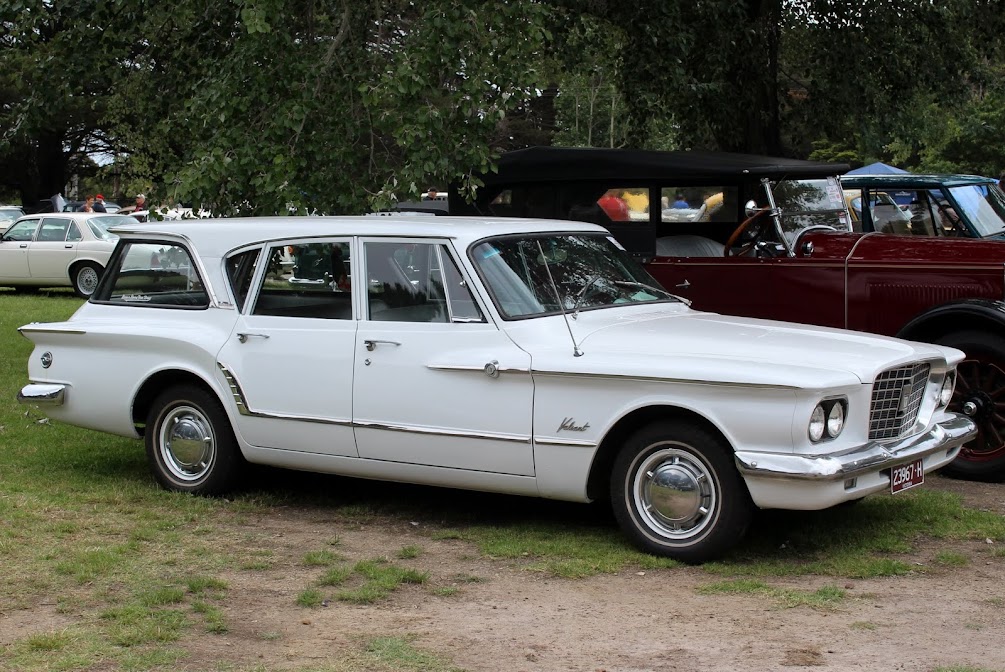
Although possibly one of the ugliest designs of American car ever, this Chrysler Valiant and its successor models were very successful in Australia, and this 1962 one was the first to be fully assembled in Australia. The 145hp inline six was more powerful than competing models from Holden and Ford of the time.
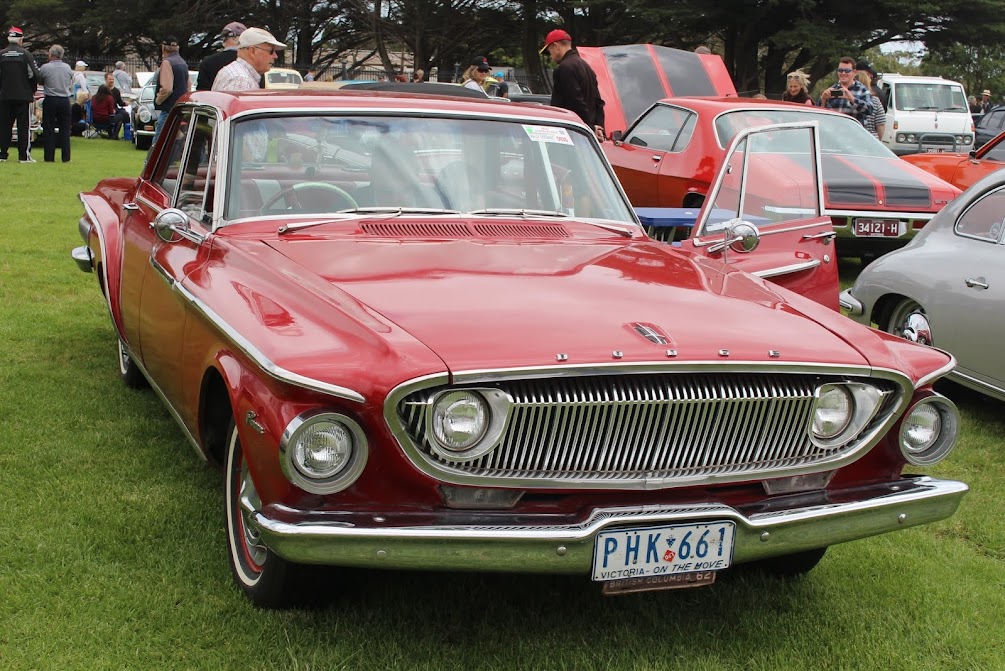
This 1962 Dodge Phoenix was an Australian-built version of the American Dart, powered by a 5.2L V8.
The 1953 F100 truck is a favourite for modern modders, and are very visible on Australia's veteran car events as well as on the roads.
Designed to compete with the classic Chevrolet Bel Air, this is Ford's lookalike Fairlane Victoria of 1956, a 2-door hardtop in the sporty ethos of the time. Variants were produced in Australia, but this is an original American import with LHD.
Another original LHD American, this is the Ford Galaxie 500 produced to compete with Chevrolet's Impala. This is a 1962 model, with a 7.0L V8. The car was also built in Australia.
Produced in eleven model generations, the Ford Thunderbird created the niche of the personal luxury car. This is the classic 1955 2-seat coupe, the porthole windows a unique feature. A 4.8L V8 was the power unit.
Other Thunderbirds at the Mornington Show included (below) the 3rd generation early 60s one with the pointy front that became its own classic, the 4th generation which featured flashing sequential indicator tail lights, and the quite awful 7th generation of the late 1970s.
This specifically Australian Holden FJ from 1954 was also exported to New Zealand. Power came from a 2.2 inline six.
The Holden FE Utility from 1956 also had that 2.2 inline six, and like the Ford F100 is a popular choice with old car aficionados.
A model name that has been running since 1939, the Lincoln Continental has been a byword for American luxury. This version is a 2-door coupe built between 1940-1948, powered by a 4.8L V12.
This original American Mercury Convertible Coupe from 1949 has only 51,000 original miles on the clock, and has been totally restored to original condition by its owners. It was one of the first post-war Mercurys, and was powered by a 4.2L V8.
A bunch of Oldsmobiles figured at the show, including (above) this beautiful pre-war coupe 8, and (below) the 1946 sedan, the 1949 88 4-door sedan, and the 1955 Super 88 Holiday Convertible.
Pontiac were the last civilian automobiles to be built in the USA when civilian production was shut down in 1942 so that all factories could work for the war effort. This is one of those which came back after WW2, a 1948 Silver Streak Coupe.
This 1964 Pontiac Bonneville was right in tune with the big front and rear 'decks' popular in America at the time, before style went Coke-bottle.
The 1964 version of the Studebaker Hawk Gran Turismo was the best styled, with a smoothened rear trunk design that finally cleaned up a fussy back end. It was also the end of a line of Hawks which had begun in 1956.
There was lots more at Mornington, but these were the ones that shifted my gears.
By sheer coincidence, I happened to be at the RACV Great Australian Rally 2015 at Mornington Racecourse outside Melbourne this past weekend, and there was much automotive Americana to be looked at, admired, and even lusted after.
Australia has a strong tradition of old American cars, many of them imported directly, some of them built by American-owned auto plants in Australia, such as GM's Holden, Chrysler, and Ford. Those who have old vehicles here really do look after them, and they are regularly driven through the summer.
Here are just some examples of cars from the golden ages of chrome, extreme size and style, and rumbling V8s.
The Buick Eight Super from the latter 1940s had an inline eight 4.1L engine, known as Fireball.
The gorgeous 1953 Buick Riviera Coupe had a new 5.3 V8 known as Nailhead. This example is in absolute prime condition.
And isn't this just another fabulous creation from Buick, the 1950 Super Convertible, again with that Fireball inline eight.
A 1981 Checker Taxi Cab, iconic and little changed from 1958-1982. The company's origins went back to 1910.
This 1968 Chevrolet Impala Sedan has the classic Coke-bottle lines popular in America around that time. It was also the first Impala to have a collapsible steering column as a safety feature.
The third generation Impala was to become the classic large American convertible in that particular format, and this 1961 RHD model would have been built in Canada in RHD form for Australia and New Zealand. Engines ranged from 3.8L inline sixes through V8s up to 6.7L. The interiors were film star gorgeous.
Chrysler 300s were produced in limited edition numbers as luxury cars through the 50s, 60s and 70s, and the name was resurrected in recent years for a modern large Chrysler. These two are a 1956 300B, a 2-door hardtop with 5.8L 'Hemi' V8 power, and a 1958 300D in the same format, this time the engine upped in size to L.4L and the last time the old Hemi engine was used.
Although possibly one of the ugliest designs of American car ever, this Chrysler Valiant and its successor models were very successful in Australia, and this 1962 one was the first to be fully assembled in Australia. The 145hp inline six was more powerful than competing models from Holden and Ford of the time.
This 1962 Dodge Phoenix was an Australian-built version of the American Dart, powered by a 5.2L V8.
The 1953 F100 truck is a favourite for modern modders, and are very visible on Australia's veteran car events as well as on the roads.
Designed to compete with the classic Chevrolet Bel Air, this is Ford's lookalike Fairlane Victoria of 1956, a 2-door hardtop in the sporty ethos of the time. Variants were produced in Australia, but this is an original American import with LHD.
Another original LHD American, this is the Ford Galaxie 500 produced to compete with Chevrolet's Impala. This is a 1962 model, with a 7.0L V8. The car was also built in Australia.
Produced in eleven model generations, the Ford Thunderbird created the niche of the personal luxury car. This is the classic 1955 2-seat coupe, the porthole windows a unique feature. A 4.8L V8 was the power unit.
Other Thunderbirds at the Mornington Show included (below) the 3rd generation early 60s one with the pointy front that became its own classic, the 4th generation which featured flashing sequential indicator tail lights, and the quite awful 7th generation of the late 1970s.
This specifically Australian Holden FJ from 1954 was also exported to New Zealand. Power came from a 2.2 inline six.
The Holden FE Utility from 1956 also had that 2.2 inline six, and like the Ford F100 is a popular choice with old car aficionados.
A model name that has been running since 1939, the Lincoln Continental has been a byword for American luxury. This version is a 2-door coupe built between 1940-1948, powered by a 4.8L V12.
This original American Mercury Convertible Coupe from 1949 has only 51,000 original miles on the clock, and has been totally restored to original condition by its owners. It was one of the first post-war Mercurys, and was powered by a 4.2L V8.
A bunch of Oldsmobiles figured at the show, including (above) this beautiful pre-war coupe 8, and (below) the 1946 sedan, the 1949 88 4-door sedan, and the 1955 Super 88 Holiday Convertible.
Pontiac were the last civilian automobiles to be built in the USA when civilian production was shut down in 1942 so that all factories could work for the war effort. This is one of those which came back after WW2, a 1948 Silver Streak Coupe.
This 1964 Pontiac Bonneville was right in tune with the big front and rear 'decks' popular in America at the time, before style went Coke-bottle.
The 1964 version of the Studebaker Hawk Gran Turismo was the best styled, with a smoothened rear trunk design that finally cleaned up a fussy back end. It was also the end of a line of Hawks which had begun in 1956.
There was lots more at Mornington, but these were the ones that shifted my gears.
9 November 2012
Do you remember...?
Motoring in the grand times, recalled in this picture from June 1958 taken on a Veteran Car Run from Donnybrook to Bray. Mother holds a mechanic's flat cap while he takes a spanner to the wheel.The picture is from the Lensman collection recently published, The 1950s Ireland in Pictures. Available in bookshops throughout Ireland and online at www.irishphotoarchive.ie, price €14.99
The 1950s Ireland in Pictures is published by O’Brien Press, and contains 130 images from the Lensmen Photographic Archives. The publication includes images from the world of entertainment and theatre; Olympic achievements and sporting events; horse-racing and show-jumping; politics and religion; industry and agriculture, and much more.
Christy Ring, Laurel and Hardy, Ronnie Delany, Tom Barry, Joseph Locke, Noel Purcell, Maeve Kyle, Leo Rowsome, Cyril Cusack, Siobhan McKenna, Vivien Leigh, Noel Coward and Michael MacLiammoir are among the well-known personalities in the book.
The 1950s marked the last decade of ‘old’ Ireland when all communication was local. It was prior to the introduction of television and the massive growth in international communications that ensued.
The 1950s Ireland in Pictures is a companion volume to the The 1960s Ireland in Pictures published in 2011. This major series continues in 2013 with collections of iconic photographs from the 1970s and 1980s.
Subscribe to:
Posts (Atom)