The self-driving car vision will be a growing feature of motor shows, like the the Smart concept planned for Frankfurt the week after next, writes Brian Byrne.
With a teaser picture the brand previews the first model from the Daimler stable that features all four attributes of the parent company's strategy for autonomous vehicles — connected, autonomous, shared and electric, known by the acronym CASE.
The concept will showcase thoughts on a vehicle that can be summoned by a customer to take it for the duration of a point to point journey, after which it will be available to another customer.
This could be the taxi of the near enough future, without a gabby driver …
Showing posts with label autonomous cars. Show all posts
29 August 2017
21 August 2017
Toyota to show off automated driving at Tokyo 2020
![]() |
| Toyota Concept 1 |
A number of its prototype self-driving cars will be operating in a specific area of the city, which will be fully mapped for the technology.
Toyota says it isn't emphasising fully autonomous cars, but vehicles in which there is still a 'partnership between human and machine' under what it calls its 'Mobility Teammate Concept'.
5 July 2017
'Autocops' to patrol in Dubai this year
Dubai is adding a fleet of self-driving robot cars to its patrol resources later this year, writes Brian Byrne.
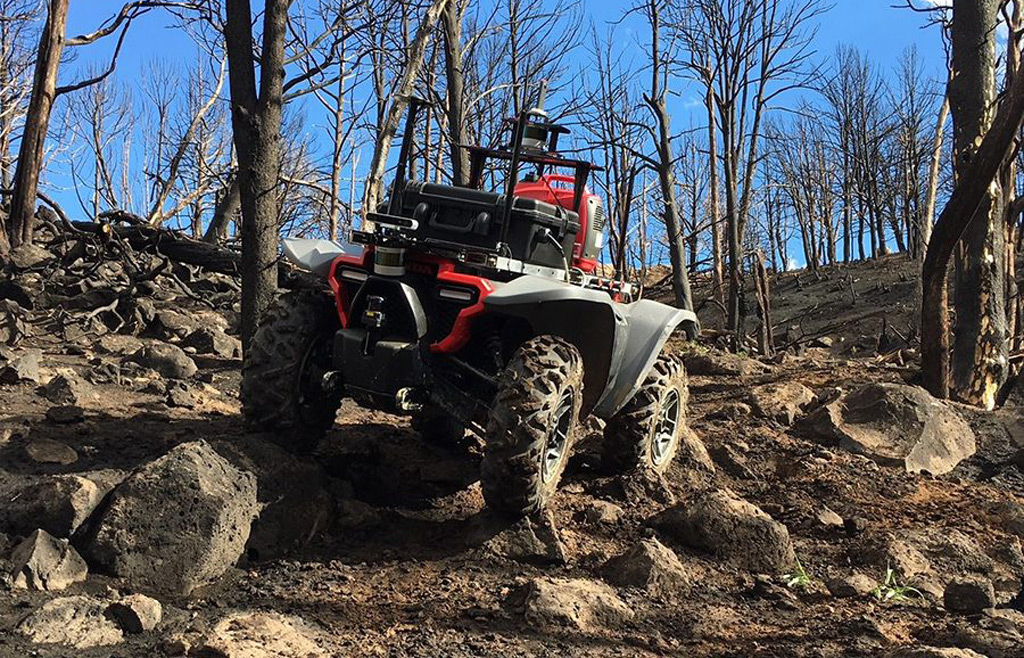
Described as a self-driving security robot, the unmanned vehicle will have a range of imaging sensors, including cameras and thermal monitors, scanners and radar. The systems will include licence plate and face recognition technologies.
Named OR-3, the vehicle will also have a drone on board to give it aerial surveillance capacity. The car will monitor for incidents and illegal behaviour, and will be controlled from a home base … presumably staffed with real cops?
12 June 2017
Honda boosts research for autonomous, electrification
Honda plans to have fully autonomous cars capable of city driving by 2025, writes Brian Byrne.
That indicates the Japanese company is determined not to be left behind in a race where giants like Ford and Nissan plan vehicles with similar capability by as soon as 2020.
In a strategy named 'Vision 2030', Honda also plans to have two-thirds of its models lineup powered by petrol hybrid, plug-in hybrid, electric cars and hydrogen fuel cell powertrains by 2030.
The Clarity FC car above is already in production, and will be joined this year by a pure electric variant.
That indicates the Japanese company is determined not to be left behind in a race where giants like Ford and Nissan plan vehicles with similar capability by as soon as 2020.
In a strategy named 'Vision 2030', Honda also plans to have two-thirds of its models lineup powered by petrol hybrid, plug-in hybrid, electric cars and hydrogen fuel cell powertrains by 2030.
The Clarity FC car above is already in production, and will be joined this year by a pure electric variant.
11 April 2017
New York opens way for self-driving cars testing
New York state is about to change a law about drivers having to keep one hand on the steering wheel at all times, so as to allow the testing of self-driving cars, writes Brian Byrne.
The legislation is ready for the state governor’s signature, and will afterwards bring New York into line with a number of other states — including California and Arizona — to allow such testing on public roads.
The change is only for so-called self-driving vehicles, though, as the law on a hand on the wheel will remain for drivers of normal cars.
The testing period will last for a year until April 2018.
The legislation is ready for the state governor’s signature, and will afterwards bring New York into line with a number of other states — including California and Arizona — to allow such testing on public roads.
The change is only for so-called self-driving vehicles, though, as the law on a hand on the wheel will remain for drivers of normal cars.
The testing period will last for a year until April 2018.
6 April 2017
Revised S-Class will have more autonomous tech

Enhanced driver assistance systems will feature on a mid-life revision of the Mercedes-Benz S-Class due for reveal in the autumn, writes Brian Byrne.
The current car, launched in 2013, introduced elements of automated driving with a number of such systems, and these have been built on to extend the environments in which the car itself can take over various driving management functions.
These will include Active Distance Assist which takes cognisance of upcoming route features such as motorway exits, toll booths, and roundabouts. It will adjust cornering speeds depending on the route feature and the selected drive mode in the car.
Active Lane Change will be possible by simply nudging the indicator stalk, when the car’s systems will check whether it is safe to move into the required lane and when it is safe, will perform the manoeuvre.
In stop and go traffic, the S-Class will be able to handle stop periods of up to 30 seconds, inside which it will stop and go automatically in slow traffic.
Evasive Steering Assist will automatically apply extra torque to a turning manoeuvre in an emergency such as when a pedestrian is detected in the line of direction.
The revised S-Class will also brake and stop the car in its lane if it detects that there has been no steering wheel movement for a certain period of time, after giving the driver warning.
An improved instrument panel interface will keep the driver visually aware of the current status of all the DAS features, indicating such matters as when the driver should have both hands on the wheel.
The S-Class will also have Car-to-X Communication by which hazards encountered by cars with the system will be automatically transmitted to other cars on the route with similar systems.
1 March 2017
Peugeot pushes autonomous concepts
With a stated ambition to have a fully-autonomous production car for sale in 2020, Peugeot is using next week’s Geneva Motor Show to to conceptualise how occupants might use it, writes Brian Byrne.
The Instinct concept will feature connectivity systems through which the occupants can seamlessly access their home, work and leisure digital resources through the internet ‘cloud’.
The concept showcases Samsung’s Artik Internet of Things connectivity system.
A 300hp plug-in hybrid powertrain is part of the concept.
The PSA Group will begin testing autonomous car systems on open highways next month, having spent some time over the last two years piloting the technology under control conditions.
The Instinct concept will feature connectivity systems through which the occupants can seamlessly access their home, work and leisure digital resources through the internet ‘cloud’.
The concept showcases Samsung’s Artik Internet of Things connectivity system.
A 300hp plug-in hybrid powertrain is part of the concept.
The PSA Group will begin testing autonomous car systems on open highways next month, having spent some time over the last two years piloting the technology under control conditions.
5 January 2017
BMW test autonomous vehicles in 2017
BMW will have a fleet of 40 self-driving test vehicles on the roads by the second half of 2017, writes Brian Byrne.
The pilot is in conjunction with computer chip giant Intel and the Israel-based MobilEye company which specialises in developing systems to analyse and coordinate information from automotive sensors.
BMW announced the partnership last July, and more details of the next stage will be revealed on Monday at the North American International Auto Show in Detroit.
A ‘scaleable’ architecture for the systems has been developed by the partnership, which will be made available to other carmakers.
BMW is hoping to have its first production autonomous vehicle on the road in 2021.
The pilot is in conjunction with computer chip giant Intel and the Israel-based MobilEye company which specialises in developing systems to analyse and coordinate information from automotive sensors.
BMW announced the partnership last July, and more details of the next stage will be revealed on Monday at the North American International Auto Show in Detroit.
A ‘scaleable’ architecture for the systems has been developed by the partnership, which will be made available to other carmakers.
BMW is hoping to have its first production autonomous vehicle on the road in 2021.
23 December 2016
VW will show second electric concept at Detroit
Volkswagen will show its second electric vehicle in its ID series at the Detroit International Auto Show in January, writes Brian Byrne.
Following the Golf-sized ID Concept revealed at Paris this year, the second vehicle will be an MPV in format, with style links going back to the original 'Bulli' Microbus.
It will be on the thoroughly modern Modular Electric Drive Kit platform, though, which underpins the first Concept.
Volkswagen is showcasing connectivity, all-electric drive, and also developing autonomous driving with the platform. One aspect of the upcoming Concept is a steering wheel that retracts into the dashboard when autonomous operation is possible.
Following the Golf-sized ID Concept revealed at Paris this year, the second vehicle will be an MPV in format, with style links going back to the original 'Bulli' Microbus.
It will be on the thoroughly modern Modular Electric Drive Kit platform, though, which underpins the first Concept.
Volkswagen is showcasing connectivity, all-electric drive, and also developing autonomous driving with the platform. One aspect of the upcoming Concept is a steering wheel that retracts into the dashboard when autonomous operation is possible.
14 December 2016
Self-driving cars would enable 'enjoying the scenery'
![]() |
| Ford Fusion autonomous test cars in the US. |
The survey commissioned by Ford also shows that seven in ten would use the time in the car 'chat on the phone' and almost two-thirds would 'have a bite to eat'.
Some 16pc of respondents said they'd be quite happy to send their children to school on their own in an autonomous vehicle.
Ford plans to start testing autonomous cars on European roads next year, and is planning to provide autonomous vehicle ride-sharing service in the US in 2021.
Ford has committed to going direct to 'Level 4' autonomy, meaning the car is able to drive unmonitored in a specific use case such as a city area.
30 November 2016
'Super Cruise' will allow hands-free driving, but will 'watch' the driver
A smart cruise control system being developed by General Motors will let drivers remove their hands from the wheel while in operation, writes Brian Byrne.
‘Super Cruise’ uses facial recognition to make sure that the driver is still paying attention to the road.
The company is planning to roll out the system next year in the US, in a Cadillac brand car.
Current cruise assist systems require that a driver have their hands on the wheel at all times, but this semi-autonomous mode would recognise when a driver isn’t paying attention, or if they’re falling asleep while the system is engaged.
The Super Cruise would signal a red alert, vibrate the seat and play a recorded message. If there’s no response, GM would then use its OnStar driver assistance system to try and communicate directly with the driver.
Super Cruise will hand back control of the vehicle to the driver if it notices that the road gets twistier. It will also turn on the car’s emergency hazard lights and slow the vehicle if the driver doesn’t respond. In certain situations it could slowly stop the car.
‘Super Cruise’ uses facial recognition to make sure that the driver is still paying attention to the road.
The company is planning to roll out the system next year in the US, in a Cadillac brand car.
Current cruise assist systems require that a driver have their hands on the wheel at all times, but this semi-autonomous mode would recognise when a driver isn’t paying attention, or if they’re falling asleep while the system is engaged.
The Super Cruise would signal a red alert, vibrate the seat and play a recorded message. If there’s no response, GM would then use its OnStar driver assistance system to try and communicate directly with the driver.
Super Cruise will hand back control of the vehicle to the driver if it notices that the road gets twistier. It will also turn on the car’s emergency hazard lights and slow the vehicle if the driver doesn’t respond. In certain situations it could slowly stop the car.
4 November 2016
Self-driving cars to benefit elderly most — Bosch
Drivers in the 55 or more age group at the moment may well benefit most from the arrival of autonomous car technology, writes Brian Byrne.
That's the view of automotive components company Bosch, whose demographic research in the UK suggests that people in their 70s and 80s would be able to stay mobile longer when self-driving cars are a significant reality.
According to figures from Age UK, a quarter of over-65s find it difficult to get to their local hospital, and 12pc struggle to get to their supermarket. Bosch says driverless cars will be significant in changing this.
"By the time baby boomers reach their 70s and 80s, we expect the driverless car to be quite common on UK roads," says Steffen Hoffmann, UK President of Bosch, "allowing this generation to stay mobile safely well into their old age. This allows them to keep their independence for longer. Therefore, it is important that they are aware of the technology at this early stage, so that they can take advantage of it when they need to."
However, the downside of the survey is that it also showed this over-55s age group knows least about autonomous technology, and doesn't feel safe about the concept.
On the other hand, the company says today's children fully expect that their personal transportation in the future will be driving itself. One participant, 6-year-old Daniel, said blithely "We tell it [the car] where to go and then it copies a map where to go and then it drives there itself!"
Of course it does …
That's the view of automotive components company Bosch, whose demographic research in the UK suggests that people in their 70s and 80s would be able to stay mobile longer when self-driving cars are a significant reality.
According to figures from Age UK, a quarter of over-65s find it difficult to get to their local hospital, and 12pc struggle to get to their supermarket. Bosch says driverless cars will be significant in changing this.
"By the time baby boomers reach their 70s and 80s, we expect the driverless car to be quite common on UK roads," says Steffen Hoffmann, UK President of Bosch, "allowing this generation to stay mobile safely well into their old age. This allows them to keep their independence for longer. Therefore, it is important that they are aware of the technology at this early stage, so that they can take advantage of it when they need to."
However, the downside of the survey is that it also showed this over-55s age group knows least about autonomous technology, and doesn't feel safe about the concept.
On the other hand, the company says today's children fully expect that their personal transportation in the future will be driving itself. One participant, 6-year-old Daniel, said blithely "We tell it [the car] where to go and then it copies a map where to go and then it drives there itself!"
Of course it does …
14 October 2016
Robot buses on the street
This a robot bus operating on a set route with up to nine passengers and no driver, writes Brian Byrne.
Two of them — they're electric and French made — are on test in Espoo in Finland, to see how an autonomous passenger vehicle can work alongside normal traffic.
With camera vision, laser and GPS, the 12km/h buses will be on trial for a month, following on from a test in Helsinki on a less complex route.
The project is funded by the EU, and may result in scheduled operation in some few years — likely linking people from their homes to the nearest railway station.
The two buses will later be brought to the city of Tampere for trials until winter conditions stops things.
Though driverless, they do have an engineer on board at all times, monitoring what's going on.
The developers, EasyMile, have also been demonstrating their vehicles in Norway, Switzerland, and have been on public trials in Singapore since last year.
The shuttles are manufactured by French company Ligier, long established producers of mini cars.
EasyMile specialises in developing the software and other elements for what are known as 'last mile' mobility solutions.
Two of them — they're electric and French made — are on test in Espoo in Finland, to see how an autonomous passenger vehicle can work alongside normal traffic.
With camera vision, laser and GPS, the 12km/h buses will be on trial for a month, following on from a test in Helsinki on a less complex route.
The project is funded by the EU, and may result in scheduled operation in some few years — likely linking people from their homes to the nearest railway station.
The two buses will later be brought to the city of Tampere for trials until winter conditions stops things.
Though driverless, they do have an engineer on board at all times, monitoring what's going on.
The developers, EasyMile, have also been demonstrating their vehicles in Norway, Switzerland, and have been on public trials in Singapore since last year.
The shuttles are manufactured by French company Ligier, long established producers of mini cars.
EasyMile specialises in developing the software and other elements for what are known as 'last mile' mobility solutions.
5 June 2014
Renault/Nissan boss predicts autonomous cars in 2018
Several carmakers and suppliers are working to bring automated driving systems to the market in the next few years, writes Trish Whelan.
Carmakers including Mercedes-Benz, Volvo, Ford and Renault are all working on automated driving systems while technology giant Google is developing its own fleet of self-driving vehicle prototypes.
Last August, a self-driving Mercedes-Benz S class drove 77 miles through Germany without any driver input.
Renault-Nissan CEO Carlos Ghosn is predicting that cars that drive themselves could be on the roads four years from now, provided red tape doesn't get in the way. He says the problem 'isn't technology, it's legislation and the whole question of responsibility that goes with these cars moving around ... and especially who is responsible once there is no longer anyone inside'.
Renault has built the Next 2 prototype version of its electric Zoe model which enables drivers to let go of the controls at speeds below 30km/h thanks to GPS positioning, cameras and sensors, though a human must stay behind the wheel.
An amendment to United Nations rules agreed earlier this year would let drivers take their hands off the wheel of self-driving cars. The change was pushed by Germany, Italy and France whose high-end carmakers believe they are ready to zoom past US tech pioneers to bring the first vehicles to market. If the amendment clears all bureaucratic hurdles, it would allow a car to drive itself, as song as the system can be overridden or switched off by the driver. A driver must be present and able to take the wheel at any time.
Carmakers including Mercedes-Benz, Volvo, Ford and Renault are all working on automated driving systems while technology giant Google is developing its own fleet of self-driving vehicle prototypes.
Last August, a self-driving Mercedes-Benz S class drove 77 miles through Germany without any driver input.
Renault-Nissan CEO Carlos Ghosn is predicting that cars that drive themselves could be on the roads four years from now, provided red tape doesn't get in the way. He says the problem 'isn't technology, it's legislation and the whole question of responsibility that goes with these cars moving around ... and especially who is responsible once there is no longer anyone inside'.
Renault has built the Next 2 prototype version of its electric Zoe model which enables drivers to let go of the controls at speeds below 30km/h thanks to GPS positioning, cameras and sensors, though a human must stay behind the wheel.
An amendment to United Nations rules agreed earlier this year would let drivers take their hands off the wheel of self-driving cars. The change was pushed by Germany, Italy and France whose high-end carmakers believe they are ready to zoom past US tech pioneers to bring the first vehicles to market. If the amendment clears all bureaucratic hurdles, it would allow a car to drive itself, as song as the system can be overridden or switched off by the driver. A driver must be present and able to take the wheel at any time.
29 May 2014
Google shows its own car
This is Google's first in-house developed self-driving car, writes Brian Byrne, as opposed to the adapted Toyota Priuses which the company has been working with in its autonomous automobile programme.
The 2-seater is essentially a suburban commuter concept, with a top speed of 25mph and while the prototype shown doesn't have any driver-operated controls, the 100 planned for experimental use will have.
There's no name for what was clearly designed as a concept to make us smile in nostalgia for our Noddy cars of babyhood. But don't knock it — Google has the resources and the commitment to eventually make this project work.
And most major car companies and tech component suppliers have developed all the sensory and operational equipment required for autonomous cars. There are two big problems — legals in most countries, and the ability to deal with the unexpected in an out of the box way.
But hey, most of the planes we travel in do most of their journeys largely piloted by computer.
The 2-seater is essentially a suburban commuter concept, with a top speed of 25mph and while the prototype shown doesn't have any driver-operated controls, the 100 planned for experimental use will have.
There's no name for what was clearly designed as a concept to make us smile in nostalgia for our Noddy cars of babyhood. But don't knock it — Google has the resources and the commitment to eventually make this project work.
And most major car companies and tech component suppliers have developed all the sensory and operational equipment required for autonomous cars. There are two big problems — legals in most countries, and the ability to deal with the unexpected in an out of the box way.
But hey, most of the planes we travel in do most of their journeys largely piloted by computer.
11 December 2013
Rinspeed’s XchangE autonomous car for Geneva
With autonomous driving destined to become reality in the not-too-distant future, Rinspeed - the Swiss idea factory - is putting the occupants at the centre of the driverless car, writes Trish Whelan.
Company boss Frank M Rinderknecht claims that so far, 'hardly anyone has taken this to its logical conclusion from the perspective of the driver because travelling in a driverless car will no longer require me to stare at the road, but will let me spend my time in a more meaningful way'.
So does the interior of a vehicle have to be designed to allow the now largely unburdened driver make best use of the time gained?
Rinspeed provide the answer with a fully electric touring saloon by the name of ‘XchangE’ (pictured above and below). So far only a few highlights have been revealed including that the car’s seats are like the relaxing business-class seats of major airlines. A new operating and display concept with a host of innovative entertainment, safety and service functions make it possible to work or relax in comfort while riding in the driverless car. All passengers will have a wide variety of media or access in-depth information so will be able to read, listen to music, surf the web, play games, watch movies or hold a meeting at 120 km/h and work on files. Interestingly, the steering wheel can be ‘parked’ in the middle of the dashboard so as not to get in the way, like ‘steer-by-wire technology that can also be found on modern jet aircraft.
The creators believe autonomous driving will make individual travel more attractive compared to traveling by train, plane or long-distance coach.
We’ll see the ‘XchangeE' at the Geneva Motor Show which takes place from 6 - 16 March 2014.
Company boss Frank M Rinderknecht claims that so far, 'hardly anyone has taken this to its logical conclusion from the perspective of the driver because travelling in a driverless car will no longer require me to stare at the road, but will let me spend my time in a more meaningful way'.
So does the interior of a vehicle have to be designed to allow the now largely unburdened driver make best use of the time gained?
Rinspeed provide the answer with a fully electric touring saloon by the name of ‘XchangE’ (pictured above and below). So far only a few highlights have been revealed including that the car’s seats are like the relaxing business-class seats of major airlines. A new operating and display concept with a host of innovative entertainment, safety and service functions make it possible to work or relax in comfort while riding in the driverless car. All passengers will have a wide variety of media or access in-depth information so will be able to read, listen to music, surf the web, play games, watch movies or hold a meeting at 120 km/h and work on files. Interestingly, the steering wheel can be ‘parked’ in the middle of the dashboard so as not to get in the way, like ‘steer-by-wire technology that can also be found on modern jet aircraft.
The creators believe autonomous driving will make individual travel more attractive compared to traveling by train, plane or long-distance coach.
We’ll see the ‘XchangeE' at the Geneva Motor Show which takes place from 6 - 16 March 2014.
27 August 2013
Driverless cars rollout will be 'gradual and progressive'
Three quarters of all cars on the road will be driverless by 2035, according to a report from US-based consultants Navigant Research, writes Brian Byrne.
That could be more than 95m cars operating largely on their own, a big move up from the 8,000 autonomous cars suggested to be operating by 2020.
It will be a gradual and progressive transition, according to Navigant's David Alexander. Although early elements of the idea are already in place, like self-parking, automatic brakes and collision avoidance, the rollout to more autonomy will depend on solving legal and insurance liability issues than the availability of the technologies themselves.
That could be more than 95m cars operating largely on their own, a big move up from the 8,000 autonomous cars suggested to be operating by 2020.
It will be a gradual and progressive transition, according to Navigant's David Alexander. Although early elements of the idea are already in place, like self-parking, automatic brakes and collision avoidance, the rollout to more autonomy will depend on solving legal and insurance liability issues than the availability of the technologies themselves.
25 July 2013
Driverless cars on roads 'in decade'
It could take 30 years for completely driverless cars to become the norm, but within a decade they could be on the road in numbers and capable of interacting with 'old' technology driven cars, writes Brian Byrne.
That's the view of Martin Leach, chairman of automotive services provider Magma Group, who says there will be a degree of resistance from the public initially, particularly when it comes to trusting the technology at high speeds."
Although a number of the technologies to be used in autonomous cars have already been trialled, and some are in production such as advanced radar cruise control systems, legal issues are among the inhibiting factors.
But Leach points to advantages of the autonomous vehicles, such as permitting elderly and infirm, or people with severe disabilities, to be mobile.
He also suggests that driverless vans could be programmed to make deliveries at various times of day or night when there's reduced congestion.
He was speaking to Headline News in the UK.
That's the view of Martin Leach, chairman of automotive services provider Magma Group, who says there will be a degree of resistance from the public initially, particularly when it comes to trusting the technology at high speeds."
Although a number of the technologies to be used in autonomous cars have already been trialled, and some are in production such as advanced radar cruise control systems, legal issues are among the inhibiting factors.
But Leach points to advantages of the autonomous vehicles, such as permitting elderly and infirm, or people with severe disabilities, to be mobile.
He also suggests that driverless vans could be programmed to make deliveries at various times of day or night when there's reduced congestion.
He was speaking to Headline News in the UK.
Subscribe to:
Posts (Atom)